When Success Stories Become Compliance Nightmares
OCR’s latest actions show HIPAA violations aren’t just an IT issue, marketing practices (testimonials, social posts, tracking pixels) can trigger fines, corrective action plans, and lawsuits.
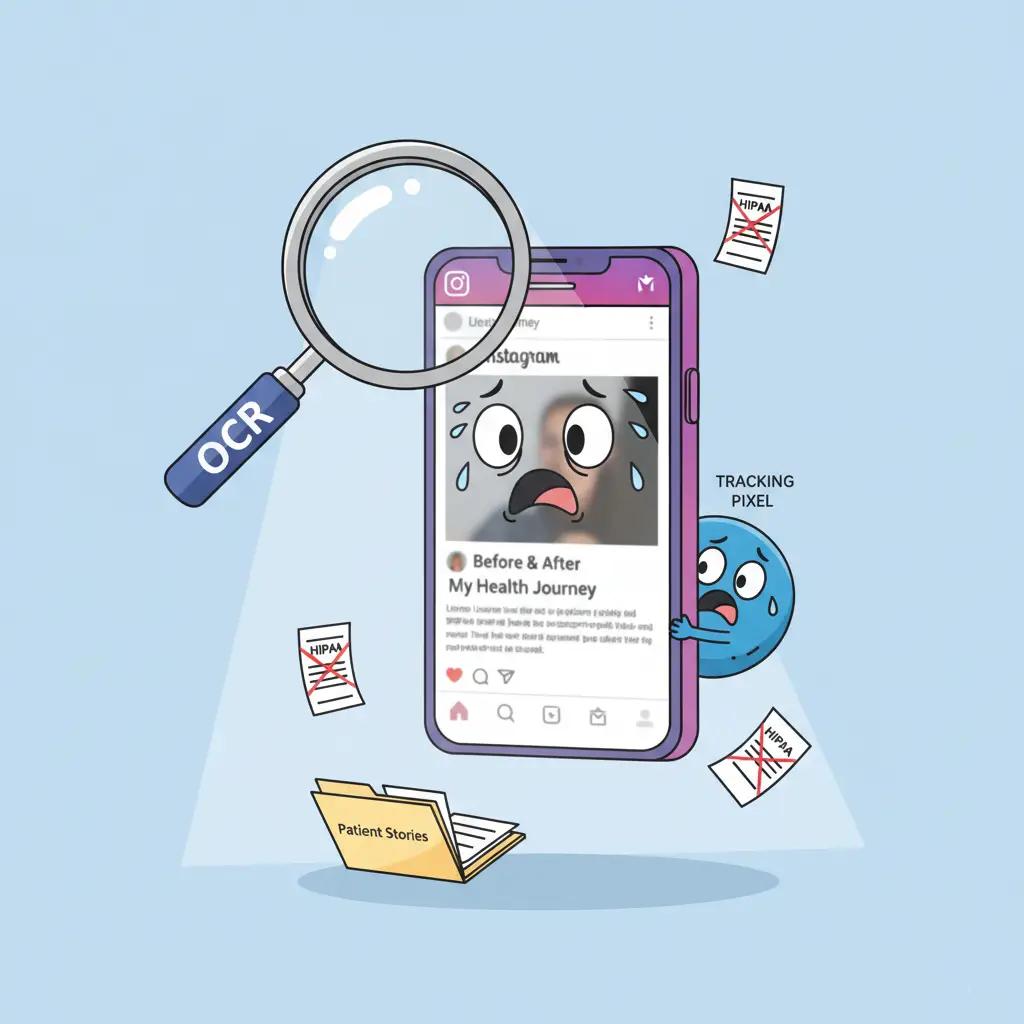
Latest in Health Tech & HIPAA: Your weekly dose of "please don't do this" from the enforcement files (week ending October 17, 2025).
Summary: OCR just proved that HIPAA violations aren't just hiding in your server logs—they're living rent-free on your Instagram. Marketing testimonials, feel-good patient stories, and tracking pixels are now the express lane to six-figure settlements.
OCR Discovers Social Media (And Your Marketing Team Is Sweating)
Note: OCR is the U.S. Department of Health & Human Services' Office for Civil Rights—the people who write checks you never want to cash.
The Cadia Healthcare Settlement: When "Patient Success Stories" Become Expensive Lessons: Five Cadia Healthcare facilities just learned that heartwarming testimonials cost $182,000 when you forget the paperwork. About 150 patients had their PHI turned into content marketing without proper authorization.
What They Did Wrong:
- Treated patient stories like user-generated content (names, photos, diagnoses—the works).
- Posted PHI across social media like it was 2015 and nobody cared about privacy.
- Let marketing teams operate with zero HIPAA guardrails.
- Skipped the whole "notifying people about the breach" step.
The Fallout:
- $182,000 settlement (that's about $1,200 per patient story).
- Two-year Corrective Action Plan with OCR watching every move.
- Company-wide HIPAA training for everyone, including that intern running TikTok.
- Individual breach notifications to all 150 patients.
What This Means: Your marketing team isn't exempt from HIPAA just because they work in Canva instead of Epic. This isn't OCR's first rodeo with marketing violations (see: Complete P.T.'s $25,000 fine back in 2016), and it definitely won't be the last. If your testimonials page doesn't have a matching folder of signed authorization forms, fix it today.
The Pixel Lawsuits: Now Featuring Your Patient Portal
Three more settlements dropped, proving that tracking pixel litigation is the gift that keeps on giving (to plaintiffs' attorneys).
SSM Health MyChart Portal Settlement:
- Yes, they put tracking pixels on an authenticated patient portal. The single riskiest place for PHI exposure.
- Eligible: anyone who logged into MyChart between and .
- Payout: cash payments plus 12 months of identity theft protection (because why not add insult to injury?).
- Claims deadline: .
Reid Health Meta Pixel Settlement:
- Classic pixel-to-Meta pipeline that nobody thought to question until the lawyers arrived.
- Affected: roughly 69,210 patients.
- Settlement perks: cash plus Medical Shield membership.
- File by: (final approval hearing still pending).
Ortho Rhode Island: Old-School Breach, New-School Price Tag:
- $2.9 million settlement after a ransomware attack.
- Proof that whether it's pixels or ransomware, healthcare privacy violations cost real money.
Bottom Line on Settlements: Pixels on portals, pixels on marketing sites, good old-fashioned data breaches—they all end the same way. With lawyers getting rich and your legal team getting ulcers.
Google Tightens the Screws (In Singapore, But Still)
Google just rolled out mandatory certification for public health campaigns in Singapore, effective .
Key Details:
- Applications opened: .
- Geographic scope: Singapore only (for now).
- The deal: get certified before using prescription drug terms anywhere in your ads, landing pages, or keywords.
- Consequences: 7-day warning, then potential account suspension.
What This Means: Google's testing region-specific healthcare ad restrictions. If it works in Singapore, expect similar rollouts in other markets. Start monitoring policy changes by region, not just globally.
Flo Health + Google: $56 Million Reminder That "Privacy-First" Needs Receipts
Flo Health and Google settled a combined $56 million lawsuit ($48 million from Google, $8 million from Flo) over allegedly sharing sensitive reproductive health data through SDKs while promising users their data was private.
Settlement Breakdown:
- Covers Flo users who logged period or pregnancy data from to .
- California residents get double the payout (because CIPA and CMIA don't mess around).
- Flo must run a privacy notice on their homepage for one full year.
- Neither company admitted wrongdoing (classic).
The Bigger Picture: Consumer health apps—especially period trackers and fertility apps—are under a microscope. State privacy laws with per-violation penalties can turn a mistake into an eight-figure settlement fast. If your app tracks sensitive health data, your privacy policy needs to match your actual data practices, not your aspirations.
What to Actually Do About This
For Healthcare Marketers:
- Audit every patient testimonial, success story, and "real patient journey" on your site and socials right now.
- Confirm you have valid, signed HIPAA authorization forms for every single patient you've featured.
- Train your marketing team on HIPAA. Yes, really. The whole team.
- Review all photos, videos, and content that could identify patients—even partially.
For Digital Teams:
- Treat authenticated patient portals like radioactive material. No client-side tracking. Period.
- If you absolutely need tracking, go server-side with proper PHI scrubbing.
- Document everything—your setup, your decisions, your review process. OCR and plaintiff attorneys will ask for it eventually.
Bottom Line: HIPAA isn't an IT problem anymore—it's an everywhere problem. Marketing testimonials and tracking pixels are now leading causes of enforcement actions and lawsuits. The good news? Server-side tracking solutions exist that let you keep your ad performance without the legal exposure. You just have to actually implement them.
Related articles
- ArticleOCR Is Coming for Everyone, Ad Platforms Are Locking Down, and the Bill for Bad Data Practices Just Hit $9M+
- GuideTelehealth No-Shows: What Your Ad Data Explains
- GuideHIPAA Violation Penalty Estimator: What a Pixel Lawsuit Could Cost Your Practice
- GuideOCR Enforcement 2026: New Leadership Priorities Every Healthcare Marketer Must Know
Want to stay up to date on the latest in healthcare marketing?
Sign up for our newsletter to receive our articles directly in your inbox—covering compliance updates, platform changes, and industry insights.
We respect your privacy. Unsubscribe at any time.