Pixels Settled, URLs Exposed: The PHI Risk Healthcare Marketers Still Miss
Healthcare tracking pixels are under legal fire. Discover what the Reid Health settlement means for your marketing stack and how to close URL-based PHI leaks.
Latest in Health Tech & HIPAA: Your weekly reminder that compliance problems evolve faster than your tech stack (week ending October 24, 2025).
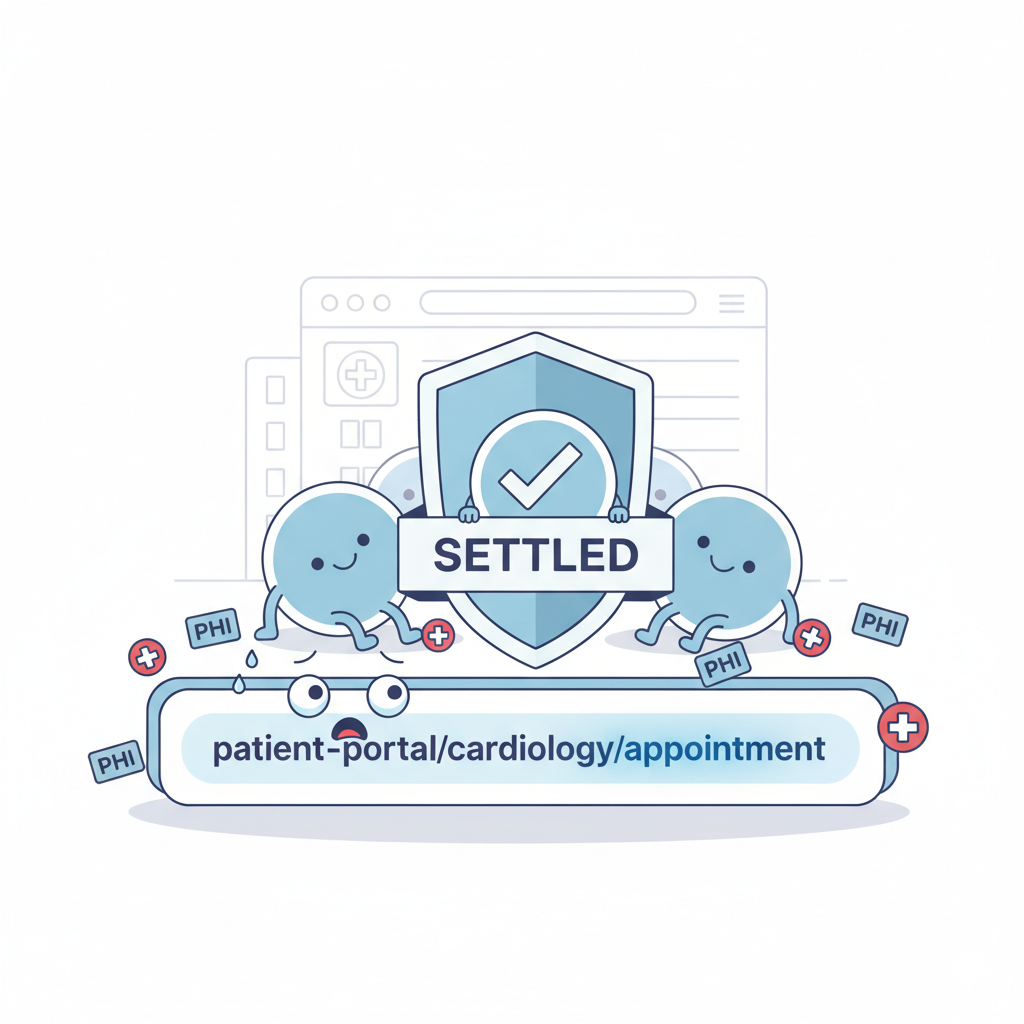
The tracking pixel debate is over. Plaintiffs won, settlements are flowing, and healthcare marketers finally got the memo. But while everyone's been busy ripping out client-side tags, a quieter PHI leak has been running in plain sight: your URLs. If you own analytics and advertising for a healthcare site, the Reid Health settlement isn't just another data point—it's your implementation checklist.1
What Changed This Month
Reid Health Settlement: The Pixel Tax Gets More Specific
Reid Health agreed to settle Meta Pixel claims with a deal that pays class members $25 each plus one year of Medical Shield monitoring. Final fairness hearing is December 9, 2025.2,3
Breach Numbers Look Good (Don't Be Fooled)
OCR reported just 26 large breaches for September 2025—the lowest monthly count since 2018. Before you celebrate, this almost certainly reflects delayed reporting and enforcement pressure, not actual risk reduction. Use the quiet to fix your infrastructure, not to relax.3
Reid Health: What Practitioners Actually Need to Know
What Plaintiffs Alleged
- Meta Pixel captured page views, searches, and form interactions that revealed specific conditions and services.
- Those signals were tied back to individual users via IP addresses and logged-in account states.
- Legal theories deployed: HIPAA violations, state consumer protection laws, negligence, unjust enrichment, fiduciary duty breaches, and privacy torts. (Basically, everything but the kitchen sink.)
Why This Matters Operationally
- Plaintiffs didn't just complain abstractly—they mapped actual pages and parameters to prove adtech ingestion.
- Logged-in sessions plus device identifiers were enough to argue PHI disclosure to a third party without a BAA.
- The settlement includes ongoing monitoring services, not just a one-time cash payout. That signals continued exposure risk, not closure.1,3
Your takeaway: Audit where page context and user identifiers leave your infrastructure. If a third party without a BAA can infer a health topic for an identifiable user, you've got a problem under HHS's tracking guidance. Full stop.1
The Leak You're Still Missing: URLs and Campaign Taxonomy
You removed pixels from authenticated pages. Gold star. But the next wave of lawsuits is coming from something you probably haven't fixed yet: your URL structures and UTM parameters.
Examples That Create Exposure
/appointment-confirmed?doctor=dr-smith&specialty=cardiologyutm_campaign=diabetes-retargeting/find-a-doctor?condition=cancer&location=chicago
Every one of those strings hits analytics platforms, tag managers, CDNs, and network logs that don't have BAAs. Combine them with an IP address or logged-in state, and HHS guidance treats them as PHI disclosures to unauthorized third parties.1
Fix It Fast
- Replace descriptive paths with neutral IDs. Keep medical context server-side where it belongs.
- Strip sensitive query parameters at the edge—before any script, tag, or tracker touches them.
- Enforce neutral UTM naming conventions. "diabetes-retargeting" should be "campaign-247" in your URLs.
- Document which third parties receive URL data, headers, or query strings by request path. Yes, this is tedious. Do it anyway.
How Teams Use Curve in This Context
Most teams moving to server-side tracking hit two problems immediately: stripping PHI before it reaches third parties, and maintaining BAA coverage across the entire data pipeline. Curve solves both by intercepting events server-side, automatically scrubbing sensitive parameters and page context, then forwarding only sanitized signals to ad platforms—all under a Business Associate Agreement. The practical outcome: your marketing team keeps full campaign performance tracking and retargeting capability without exposing URL structures, UTMs, or session identifiers to vendors who won't sign BAAs. If you've already moved tags server-side but you're still manually managing PHI detection and vendor agreements, that's the gap Curve closes.
What to Watch Next
- Settlement administration milestones through December will likely trigger copycat filings and demand letters. Audit your posture against those dates, not just your product roadmap.1,3
- Expect more complaints citing URL structures and UTMs alongside pixels. The evidence is easier to screenshot and explain to non-technical judges.1
Bottom Line for Experienced Readers
You already removed most client-side tags from sensitive pages. Great. Reid Health proves that plaintiffs are now connecting page semantics and user identifiers to argue PHI disclosure—and winning. Close the URL and UTM gap now. Move data collection to controlled server-side infrastructure with automatic PHI stripping, maintain current data-flow diagrams aligned to HHS tracking guidance, and verify that every downstream destination only receives payloads you're willing to defend in court.1
Sources
1 HHS.gov
Related articles
- GuideYour Client-Side Pixels Are Leaking PHI: Server-Side Tracking Migration for Healthcare
- GuideServer-to-Server Pixels Are Still Pixels: Google S2S and TikTok S2S in the FTC Complaint
- ArticleOCR Is Coming for Everyone, Ad Platforms Are Locking Down, and the Bill for Bad Data Practices Just Hit $9M+
- GuideHealthcare Pixel Audit: Identifying PHI Leakage in Your Ad Tracking Stack
Want to stay up to date on the latest in healthcare marketing?
Sign up for our newsletter to receive our articles directly in your inbox—covering compliance updates, platform changes, and industry insights.
We respect your privacy. Unsubscribe at any time.